

Reviews
Social media training selection checklist
Use a social media training selection checklist to assess course routes, evidence, accessibility, privacy, safe practice, claims, contracts and exit.
Use this social media training selection checklist for one named course version and one England learner group. A promising curriculum cannot compensate for an inaccessible route, unresolved monitoring, unsafe practice or unclear contract. Mark each item PASS, HOLD or NOT APPLICABLE, cite the evidence and name the decision owner.
What to take away
- Use one named course version and one England learner group for the checklist.
- Do not compare unlike routes using one score; records differ between badges and qualifications.
- Keep protection gates independent from curriculum quality and marketing claims.
- Approve only when every required gate has evidence and a named decision owner.
Define the requirement
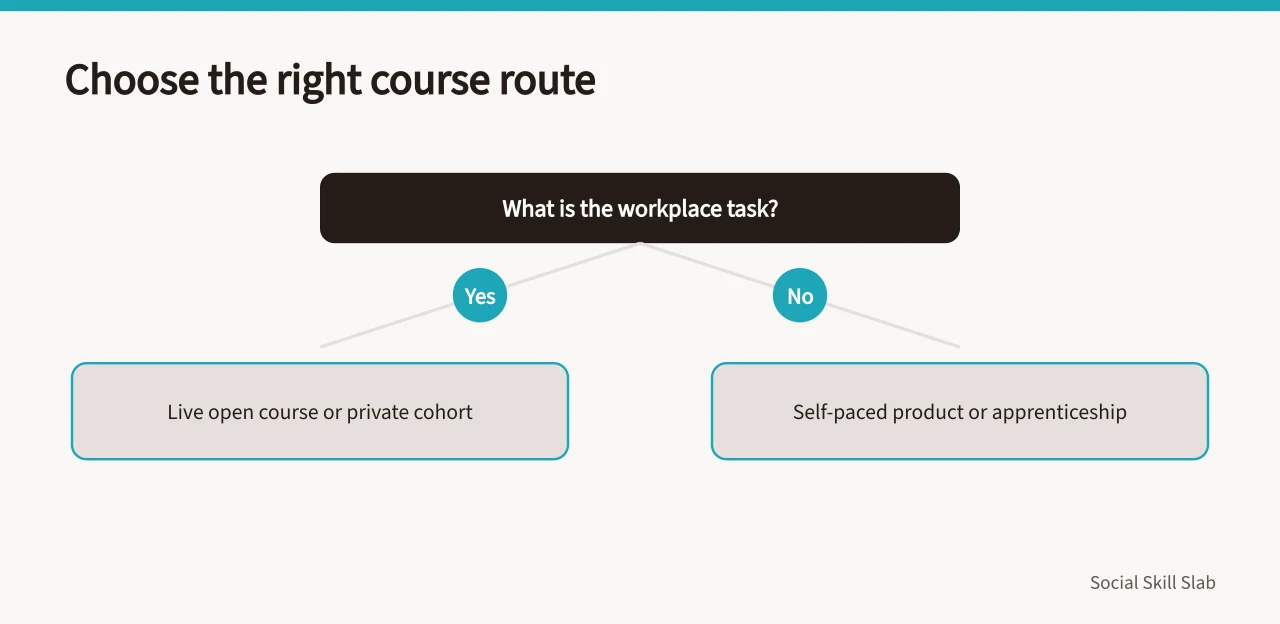
- State the workplace task, eligible learners, prior knowledge and England delivery context.
- Choose the routelive open course, private cohort, self-paced product, Digital Marketer level 3 apprenticeship standard, or a regulated qualification from City & Guilds, NCFE or Pearson.
- Write the output and acceptance evidence before reading provider marketing.
- Identify who pays, whether attendance is required work and how results may be used.
Do not compare unlike routes using one score. A completion badge, assessed supplier certificate and regulated qualification are different records.
Verify the exact offer
- Record provider trading name, legal entity, course title, version, page and verification date.
- Capture delivery, duration unit, prerequisites, curriculum, learner limits and trainer basis.
- Ask for assessment, feedback, moderation, appeals, support and change history.
- Keep absent information UNKNOWN rather than awarding average points.
Companies House verifies incorporated identity and status, not service quality. If regulated status matters, search the exact qualification and awarding organisation through Ofqual's official Register of Regulated Qualifications. On that register, enter the qualification title, select the correct awarding organisation, and check the qualification number, level, status and expiry date. Do not infer recognition from the word certificate.
Verify the exact offer
- Record provider trading name and legal entity
- Capture delivery, duration, prerequisites, curriculum
- Ask for assessment, feedback, moderation, appeals
- Keep absent information as UNKNOWN
- Check regulated status via official register
Test learning with safe evidence
- Use one fictional social-media brief and non-production accounts.
- Map each learning outcome to a task, rubric and feedback record.
- Separate attendance, completion, assessment and workplace competence.
- Define test dates, devices, reviewers, defects and retest conditions.
Hands-on means the reviewer actually completed this protocol. A preview, provider demonstration or testimonial remains desk evidence.
Keep protection gates independent
- Obtain accessible sample materials, captions, transcripts, keyboard routes and an adjustment process.
- Map enrolment, attendance, assessment, recording, analytics and support data.
- Prohibit credentials, customer information and live advertising activity in exercises.
- Review authentication, roles, subcontractors, incidents, retention, export and deletion.
- Set rights for provider materials, buyer briefs, learner work and recordings.
Consider duties under the Equality Act 2010; GOV.UK states that reasonable adjustments can apply to trainees and apprentices. The ICO's Monitoring workers guidance calls for a clear purpose and less intrusive means; it is under review after the Data (Use and Access) Act 2025. Named accessibility, equality, privacy, employment and legal reviewers must address the configured course.
Challenge claims and reviews
- Label provider features and outcomes as attributed statements until independently tested.
- Record review platform, period, incentives, moderation and exact product relevance.
- Reject invented, concealed-incentive or selectively presented reviews.
- Send public claims about recognition, results or career value to a claims reviewer.
The Competition and Markets Authority (CMA)'s online consumer reviews work shows why review collection and presentation need scrutiny. A high rating is not competence evidence.
Close procurement and exit
- Match the quote, contract, invoice and service to the verified entity and version.
- Record full price basis, tax treatment, learner quantity, dates, cancellations and substitutions.
- Define support, accessibility, data roles, security, liability, intellectual property and termination.
- Require learner-record export, deletion confirmation and continuity arrangements.
Example completed decision sheet for one named course version:
| Gate | Status | Evidence | Owner |
|---|---|---|---|
| Accessible sample materials | PASS | Captions, transcript and keyboard route supplied; adjustment process attached | Accessibility lead |
| Assessment moderation | HOLD | Moderation policy requested; provider reply outstanding | Procurement lead |
- Request an itemised quote for learner seats or cohort delivery, assessment and certification, platform charges and VAT. Request each component separately, recording whether quoted figures are indicative.
Approve only when every required gate has evidence and an owner. If a gate lacks evidence, retain a documented HOLD and a next evidence request.
Store the signed decision sheet with the course version, source extracts, specialist comments, acceptance defects and expiry date. Nominate an owner to check changes before each new cohort. If the provider cannot supply a required record, document the operational workaround and reviewer approval or reject the option. Silence is not evidence of a pass.
Before you act
Confirm the named task, learners and route, then verify the exact offer with unknown items recorded. Test with safe evidence, map data flows, challenge claims and close procurement against the verified entity and version. Record a named owner for each gate.
Common questions
How should a buyer handle missing information from a provider?
Keep absent information as UNKNOWN rather than awarding average points. Use the HOLD status and record the next evidence request.
What makes hands-on evidence valid for testing a social media course?
Hands-on means the reviewer actually completed the protocol. A preview, provider demonstration or testimonial remains desk evidence. Use one fictional social-media brief and non-production accounts, and map each learning outcome to a task, rubric and feedback record.
When should selection be reopened after a course is approved?
Reopen selection after a course, trainer, assessment, platform, contract or learner-need change. Nominate an owner to check changes before each new cohort.